
Air Jordan Shoes Breakdown: High-Top vs Low-Top Models
Selecting between high-top and low-top Air Jordan models is one of the most popular decisions encountered by sneakerheads in 2026. Both silhouettes bear decades of basketball history and fashion credibility, yet they meet distinctly different purposes on and off the court. High-top Jordans marked Michael Jordan’s career, providing the ankle stability that helped him command the NBA through six championship campaigns. Low-top models, in contrast, grew into a casual-focused choice that prioritizes mobility and hot-weather wearability. Knowing the real differences between these two constructions can prevent regret and allow you to construct a more well-rounded collection. In this matchup, we compare on-court play, wearability, fashion, and worth so you can reach a smart decision on your upcoming pair of Air Jordans.
The History Behind Both Silhouettes
When Peter Moore crafted the original Air Jordan 1 in 1985, high-top construction was the unchallenged standard for basketball footwear. The high collar enclosed Michael Jordan’s ankle and evolved into an iconic design feature that Nike pushed intensely during the “Banned” ad campaign. It was not until the Air Jordan 11 Low launched in 1996 that Jordan Brand meaningfully explored the low-cut design for a numbered model. That drop proved that fans would embrace a trimmed-down version of an already beloved shoe, opening the floodgates for low-top versions of nearly every numbered Jordan. By the mid-2000s, low-cut Jordans had grown into a summertime classic, consistently depleting alongside their high-top equivalents. Today in 2026, Jordan Brand drops approximately similar quantities of high-top and low-top colorways each season, demonstrating balanced buyer interest across both silhouettes.
Ankle Stability and Basketball Performance
High-top Air Jordans extend 2 to 3 inches above the ankle, forming a snug collar that limits lateral roll during hard cuts, pivots, and jumps. Silhouettes like the Air Jordan 1 High and Air Jordan 12 incorporate padded collars combined with reinforced heel stabilizers to lock down the entire foot during competitive play. According to a 2024 study published in the British Journal of Sports Medicine, high-top basketball sneakers lowered the frequency of ankle sprains by approximately 28 air jordan percent compared to low-cut alternatives in recreational ballers. Low-top Jordans, such as the Jordan 1 Low and Jordan 11 Low, forgo some of that structural support in return for a lighter build — commonly cutting 50 to 80 grams per shoe. For casual ballers who compete in rec-league games once or twice a week, that lighter build results in speedier acceleration and lower exhaustion over longer games. The sacrifice is tangible, though: if you have a past ankle problems, a high-top model with proper lacing remains the wiser option for any basketball play.
Comfort for All-Day Wear
Outside of basketball, wearability concerns are completely different, and low-top models frequently come out ahead. The reduced collar height removes the irritation that high-top models can cause against the Achilles tendon during long walks. Many users find that low-top Jordans feel ready after just two or three outings, while high-top models may require five to seven wears before the collar padding fully molds. Sole technology continues to be consistent across both constructions — the Air Jordan 1 employs the same Air sole unit regardless of height, and the Jordan 11 retains its full-length Air unit in both variants. Heat is another important factor: low-top versions permit considerably better breathability around the ankle, which makes them the top pick for spring and summer when sweating becomes an factor. For fall and winter or extended periods of standing, the heat retention delivered by a high-top collar can truly work in your favor, holding warmth trapped around the joint.
Fashion Appeal and Outfit Flexibility
From a visual angle, high-top Air Jordans grab eyes and work as a standout element in any outfit. The Air Jordan 1 High, in colorways like Chicago, Bred, and Royal, consistently ranks among the most snapped shoes on social media, producing millions of hashtag mentions on Instagram alone. High-top models work best alongside slim or tapered pants, sweatpants, and shorts that permit the full silhouette to be on display — covering a high-top under baggy denim defeats its visual purpose. Jordan Lows, on the other hand, present a slimmer profile that blends smoothly with a greater range of looks, such as regular-fit jeans, casual trousers, and even semi-formal pants. Fashion-forward shoe lovers in 2026 commonly wear low-cut models as a transitional shoe that bridges streetwear and business-casual settings. The outfit range gives low-tops a small upper hand for sneakerheads who are looking for a lone pair to work across various settings throughout the week.
Color and Fabric Differences
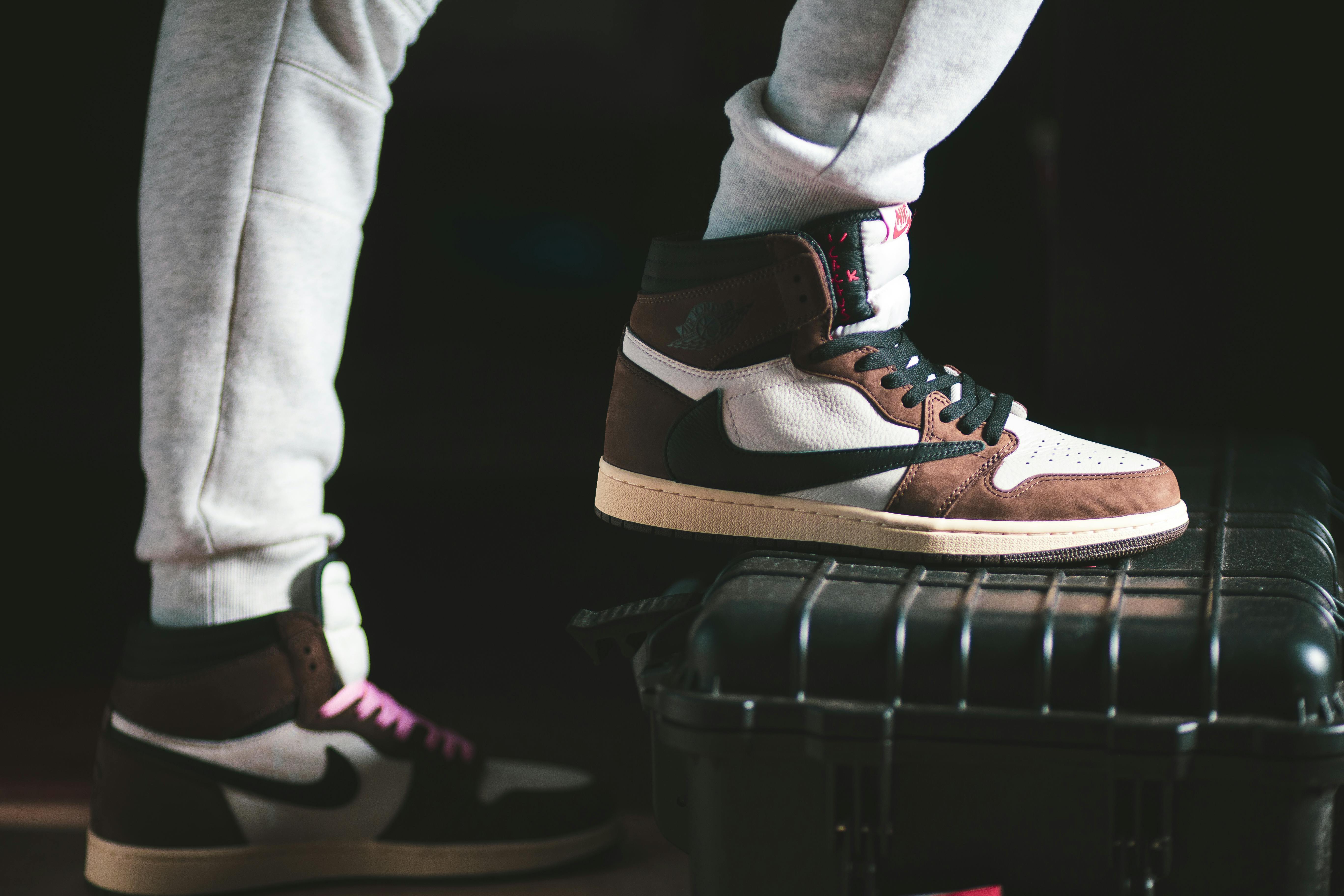
High-top Air Jordans commonly boast more surface area, which allows designers to integrate multiple color blocks and contrasting textures across the upper. This additional surface area is why celebrated editions like the Jordan 1 High “Union LA” and “Travis Scott” collaborations look so design-dense — there is simply more room to employ. Jordan Lows condense that same design approach into a smaller canvas, which can either look cleaner or appear cluttered depending on the colorway. Leather, nubuck, suede, and patent leather all show up across both constructions, though premium materials often show up more regularly in high-top exclusive releases. In terms of toughness, the extra fabric on a high-top means a bit more defense against marks around the ankle. Sneakerheads focused on protecting their Jordans immaculate for years often prefer taller versions for this real-world factor alone.
High-Top vs Low-Top: Direct Comparison
| Category | High-Top Air Jordans | Low-Top Air Jordans |
|---|---|---|
| Ankle Support | Superior — extends past the ankle | Limited — ends below the ankle |
| Typical Weight | 400–500 g per shoe | 340–420 g per shoe |
| Best Season | Fall / Winter | Spring / Summer |
| Fashion Versatility | Streetwear, athletic | Streetwear, casual, smart-casual |
| Break-In Time | 5–7 wears | 2–3 wears |
| Resale Premium | Generally higher | Moderate |
| Ventilation | Moderate | Good |
| Typical Retail Price | $170–$200 | $130–$170 |
Resale Worth and Collector Appeal
In the resale market, high-top Air Jordans have historically earned higher price increases than their low-cut equivalents. Sales data from StockX shows that the Air Jordan 1 High OG maintains a 40 to 60 percent price increase over retail in sought-after editions, while the Jordan 1 Low OG usually records a 15 to 30 percent premium. Restricted high-tops, particularly those connected with collaborations with fashion figures like Virgil Abloh or Travis Scott, have achieved aftermarket values exceeding $2,000 in mint condition. Low-cut models are gradually narrow the difference, however, as Jordan Brand focuses more intensely in premium low-cut drops designed for lifestyle consumers. The Travis Scott x Air Jordan 1 Low Reverse Mocha, for example, traded at well over $1,500 on resale platforms throughout 2023 and 2024. For investors focused on long-range returns, high-cut Jordans stay the more reliable choice, but the Jordan Low market is developing swiftly and should not be overlooked.
Which Should You Buy?
Your selection ultimately is determined by how and where you intend to use your Air Jordans. If on-court performance is important to you — even casually — the protective features of a high-top are hard to ignore, and the additional ankle support can avert sprains that would keep you out for weeks. For daily use across different environments, a low-top Air Jordan provides unparalleled range, lighter weight, and an easier break-in process that slots seamlessly into a busy schedule. Value-minded buyers will also benefit from that low-tops typically cost $20 to $40 less than their high-cut equivalents, making the most of your shoe budget further. In a perfect world, a balanced lineup includes at least one of each: a high-top for bold outfits and cooler weather, and a low-top for laid-back summer wear. Assess your present clothing collection, consider your activity level, and consider your regional weather before committing. Whichever format you select, you are acquiring a model rooted in over 40 years of creative engineering from Jordan Brand.
Final Verdict
The high-top versus low-top conversation has no one right answer because both styles perform best in separate settings. High-top Air Jordans provide superior ankle stability, more impressive resale premiums, and a bolder visual presence that owns street style photos and sneaker conventions. Low-top Air Jordans fire back with lighter construction, speedier break-in periods, greater wardrobe flexibility, and a more accessible retail price for first-time enthusiasts. In 2026, Jordan Brand persists in evolve across both formats, introducing new cushioning technology and green materials that upgrade both options year over year. The best method is to consider each release on its own merits rather than using a blanket preference for one format over the other. Whether you lace up highs for a weekend sneaker meet or step into a low-top pair for a backyard BBQ, the Jumpman logo on your foot carries the same historic prestige.